

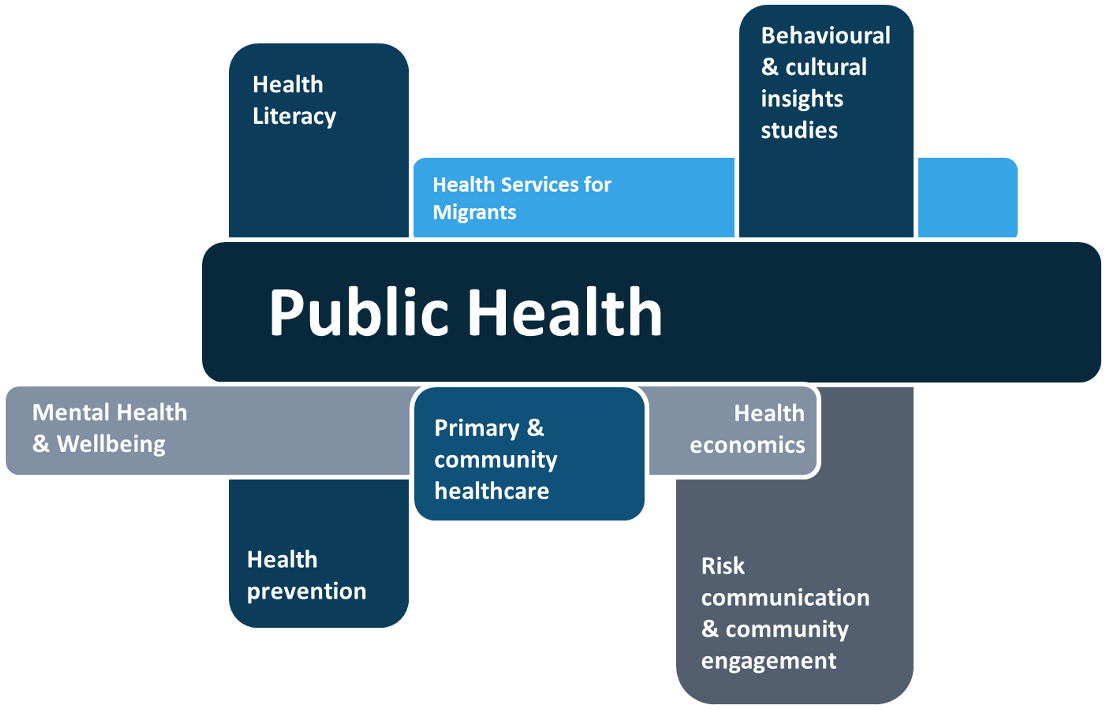
This area of expertise refers to the organized and collective efforts to prevent diseases, prolong life, and promote the health of the population through research, policies, and community-level interventions. Public health projects aim to address the social, environmental, and behavioral determinants of health, strengthen health systems, and improve access to quality medical services for all members of society, thus contributing to the creation of healthier communities and the reduction of health inequalities.
Topics
Health literacy
Health literacy refers to an individual's capacity to receive, process, and comprehend essential health information and services required to make sound health decisions. Health literacy projects seek to increase people's knowledge and comprehension of health information, allowing them to navigate the healthcare system, understand their health rights, and engage in health-promoting practices.
e-Health, Digital health, Telemedicine
E-health, digital health, and telemedicine all refer to the use of information and communication technology (ICT) to provide health services and information. These projects can include remote patient monitoring, teleconsultations, mobile health apps, and electronic health records. They seek to make healthcare more accessible, efficient, and affordable, particularly in remote or disadvantaged areas.
Health prevention
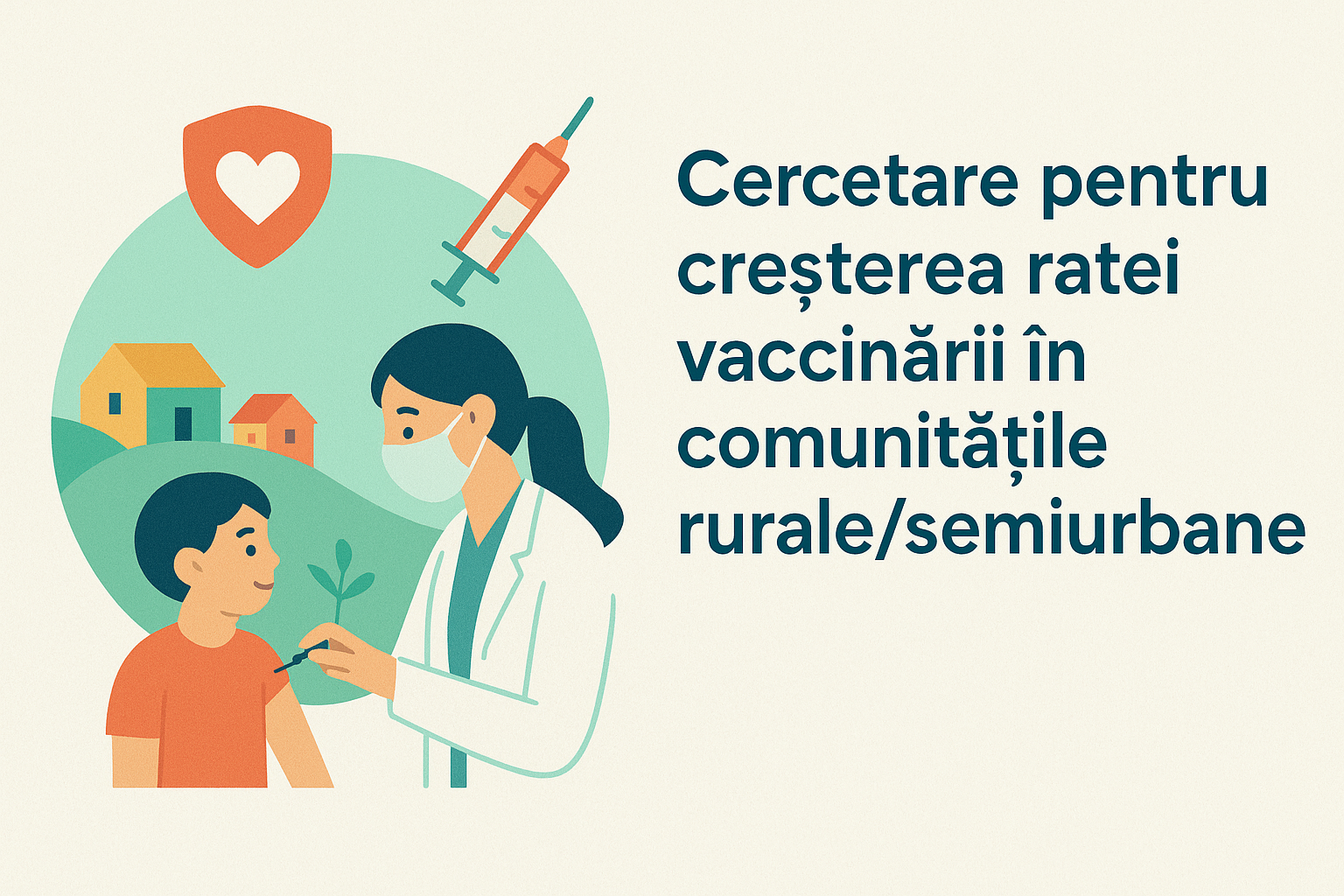
Health preventive projects aim to prevent diseases and health issues before they occur. This includes immunization programs, health education campaigns, and healthy lifestyle promotion. The goal is to reduce disease occurrence, which will improve public health and lower healthcare expenses.
Behavioural & cultural insights studies
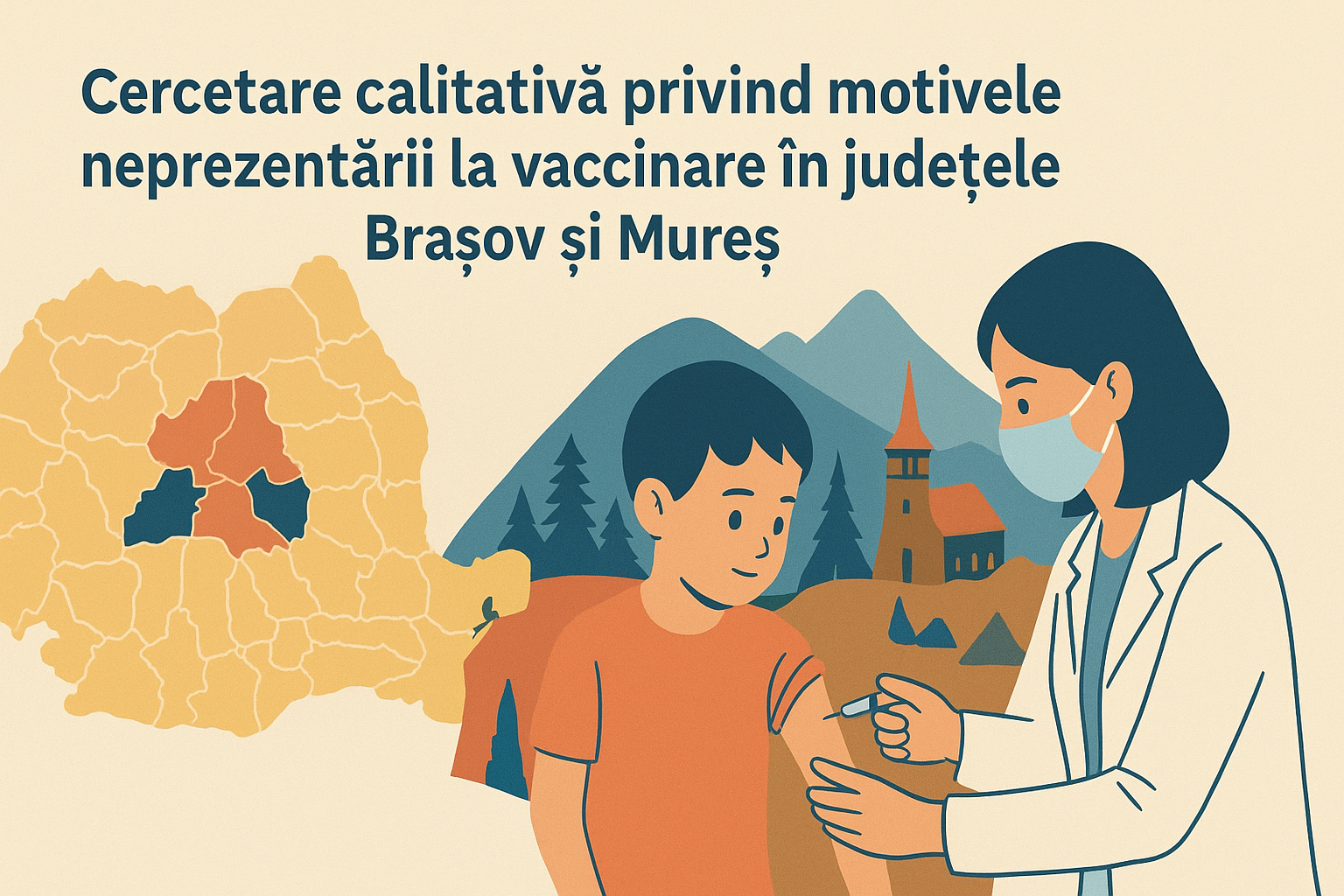
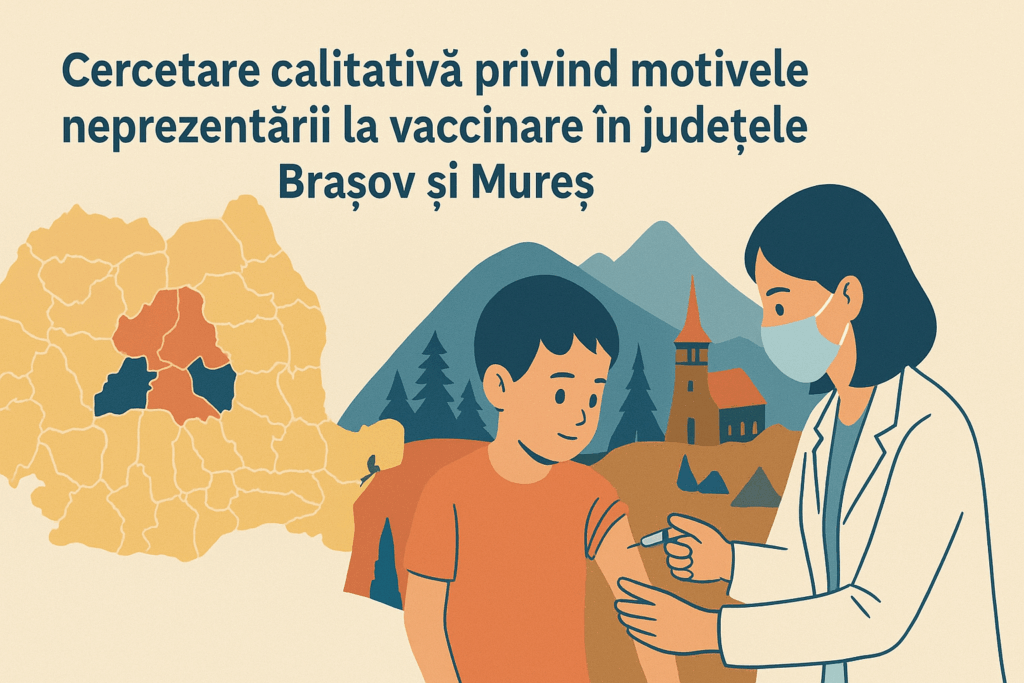
These studies investigate the psychological, social, and cultural aspects that influence health behaviors and outcomes. Projects in this field could focus on developing interventions to encourage healthy behavior, understanding barriers to healthcare access, or investigating how cultural practices affect health. The insights collected can help to shape more effective health policies and services.
Health financing, Health economics, Health system strengthening, Health system resilience
Projects under this classification aim to improve the efficiency, equality, and effectiveness of health finance and economic policy. They may concentrate on novel finance mechanisms, cost-benefit assessments of health interventions, or measures for improving health system capacity and resilience to crises. The main goal is to guarantee that health systems are sustainable and capable of providing high-quality treatment to everyone.
Primary & community healthcare, Universal health coverage
These programs aim to promote primary and community healthcare services as the core of health systems, with the goal of achieving universal health coverage. They are committed to ensuring that all people have access to basic health services (including prevention, promotion, treatment, rehabilitation, and palliation) without financial difficulty.
Health equity, Quality of care
Health equity and quality of care initiatives aim to eradicate health inequities and ensure that everyone receives high-quality care. This includes activities aimed at improving patient safety, training healthcare providers, and implementing evidence-based procedures. The goal is to provide the best possible health for all people, regardless of socioeconomic level or other factors.
Integrated healthcare
Integrated healthcare projects prioritize service coordination across the continuum of care, from primary to specialized, as well as guaranteeing care continuity. The goal is to deliver patient-centered care that addresses the full person, including their physical, emotional, and social health needs, resulting in better health outcomes and higher patient satisfaction.
Emergency Management: Prevention, Preparedness, Response & Recovery
This includes creating and implementing plans and processes for dealing with health emergencies ranging from natural catastrophes to pandemics. Projects are centered on preventing emergencies whenever possible, preparing systems and communities, responding effectively when emergencies occur, and assisting in recovery efforts to restore health care and systems.
Risk communication & community engagement
Projects in this category seek to explain health concerns and include communities in health initiatives. Effective risk communication enables the public to comprehend and make educated health decisions, whereas community participation ensures that health initiatives are culturally relevant and fulfill the requirements of the populations served.
Infodemic management
These projects tackle the difficulty of managing information overload and misinformation during health emergencies. These programs aim to guarantee that the public, healthcare practitioners, and policymakers receive accurate, evidence-based information, thereby promoting effective health responses and combating disinformation.
Food Security & Nutrition
Projects aimed at ensuring that everyone has access to adequate, safe, and healthy food. This can include community gardens, food banks, nutrition education programs, and food waste reduction policies.
Mental Health & Wellbeing, Mental Health & Social Support
Projects designed to improve mental health support systems and promote community well-being and to enhance individual resilience. Counseling services, awareness campaigns, and measures to remove the stigma associated with mental health concerns can all fall under this category.
Migration Equity & Quality of Services
Efforts to ensure equitable access to high-quality services for all migrants, regardless of legal status, history, or circumstances, with an emphasis on decreasing gaps and fostering fairness.
Integrated Migration Management
Comprehensive approaches to migration management that take into account the complex interplay of factors influencing migrants and host communities, such as legal, economic, social, and health concerns.
Health Services for Migrants
Initiatives aimed at meeting the health needs of migrants, such as mental health services, reproductive health care, and access to primary care. These projects frequently focus on removing barriers to healthcare access for migrant communities.
Eco-Health & Sustainable Living
Approaches that connect human health with environmental wellbeing through sustainable lifestyle practices. Projects may include healthy habitat design, pollution reduction strategies, and programs promoting ecological wellness in daily life.
Digital Skills for Healthcare Professionals
Competencies that equip medical personnel to effectively use digital health technologies in clinical settings. Projects may include electronic health record training, telemedicine implementation, and data analytics for improved patient care.
e-Health & Digital Wellbeing
Technologies and practices that use electronic processes and communication to deliver health services and promote wellbeing in digital environments. Projects may include telehealth platforms, health monitoring applications, and programs supporting healthy digital habits.
Technology for Health Screening & Patient Registries
Digital solutions that streamline health assessment processes and organize patient information for improved healthcare delivery. Projects may include electronic screening tools, integrated database systems, and patient monitoring applications for early disease detection.
September 2, 2024
July 1, 2024
March 1, 2024
Categories
Do you like it?