

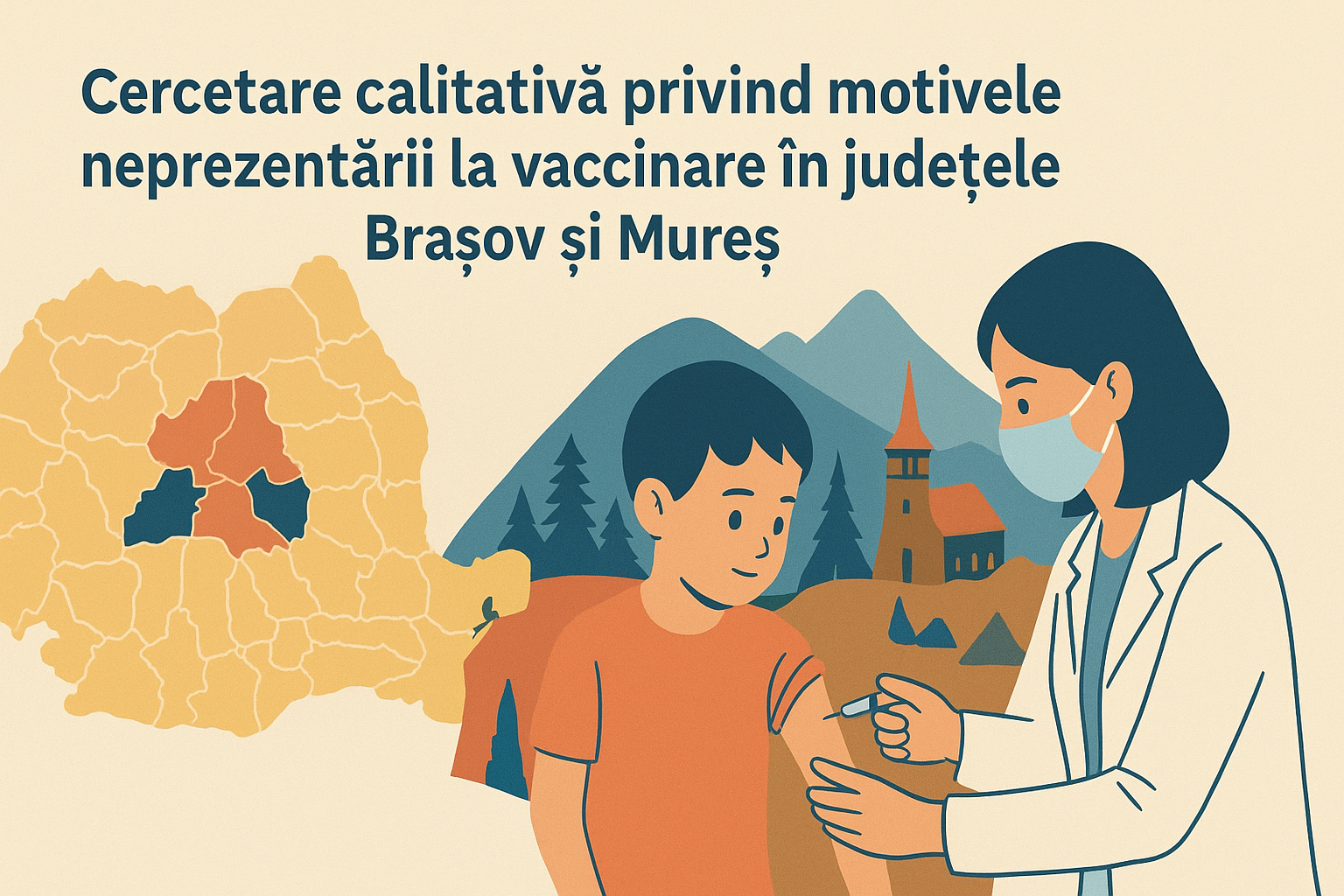
Qualitative Research on the Reasons for Non Attendance to Immunization in Brasov and Mures Counties
Goal
The aim is to understand the factors that determine non-attendance at vaccination among parents and guardians of children aged 0 to 5 in the counties of Brașov and Mureș, in order to develop tailored interventions that increase vaccination coverage and effectively address fears, beliefs, and perceived barriers.
Key figures
Interviews with caregivers
62 qualitative interviews conducted face-to-face with caregivers
Counties analyzed
2 counties analyzed: Brașov and Mureș
Duration of implementation
4 months of implementation
Resources
COM-B analytical framework (Capacity, Opportunity, Motivation - Behavior) applied in behavioral analysis
Semi-structured interview guide, developed specifically for the local context
Methodological expertise provided by ARPS and technical and financial support from UNICEF Romania
Team of qualified researchers with experience in applied social studies in the field of public health
Main activities
Development of research methodology and semi-structured interview guide
Selection of participants through purposive sampling in Brașov and Mureș counties
Conducting 62 qualitative face-to-face interviews with caregivers who did not comply with the vaccination schedule
Thematic analysis of data using the COM-B behavioral framework (Capacity, Opportunity, Motivation – Behavior)
Identifying major barriers and influencing factors in the decision to vaccinate
Formulating actionable recommendations to improve vaccination uptake
Results
Highlighting physical barriers: long distances to clinics, transportation costs, limited hours in rural areas
Identifying information gaps among caregivers with low educational levels, especially in rural areas
Exploring the emotional dimensions of the decision: fear of adverse effects, particularly autism, and parental guilt
Findings on the impact of online misinformation and anti-vaccine influencers on perceptions
Identifying information gaps among caregivers with low educational levels, particularly in rural areas. Documenting positive social influences (e.g., involvement of grandparents) and negative influences (community norms, influence of religious leaders or anti-vaccine groups).
Identifying the lack of effective communication from medical staff regarding vaccine safety
Proposed integrated solutions: improving physical access, expanding the network of health mediators, contextualized communication strategies, and combating misinformation